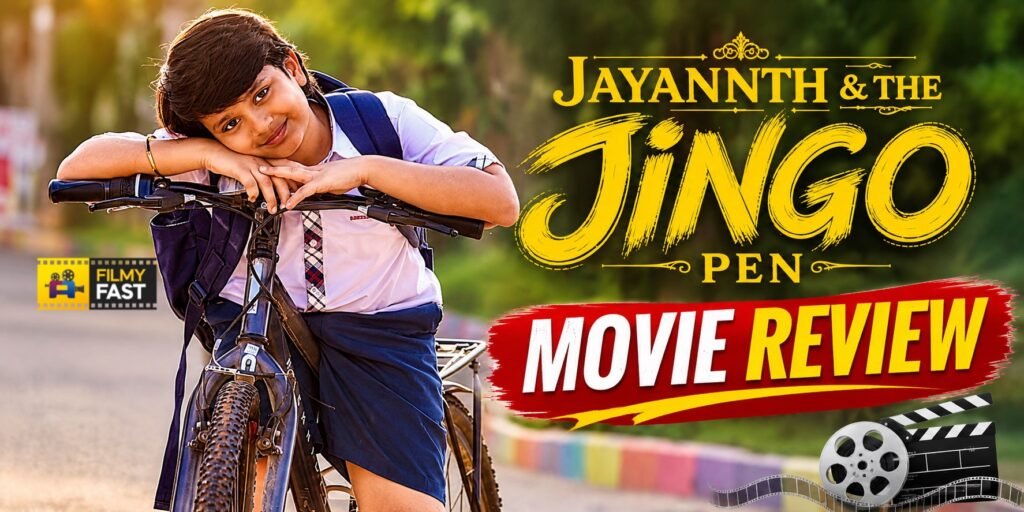
Movie Description
Namo Jayam Productions presents Jayannth & The Jingo Pen, a children’s entertainer produced by Divya Praveen Bolisetty and directed by National Award-winning filmmaker Naveen Deshaboyina. Released on November 14, coinciding with Children’s Day, the film features Master Jayannth Bolisetti, Baby Uha Reddy (of Mana Shankara Vara Prasad Garu fame), Satyam Rajesh, Ashish Gandhi, Manasa Radhakrishnan, Tanikella Bharani, Kasi Viswanath, Ashok Kumar, Manik Reddy, Srikanth Reddy and others in prominent roles.
With childhood, education and family relationships at its core, does the film deliver an entertaining and meaningful cinematic experience? Let’s take a look.
Story
Jayannth is a mischievous schoolboy who finds mathematics extremely difficult. His fear of the subject is further intensified by his mathematics teacher Harsha (Satyam Rajesh), whose strict and intimidating teaching methods make learning an unpleasant experience for students.
Jayannth and his gang are notorious for their late arrivals, poor academic performance and playful mischief. His antics frequently land his parents (Ashish Gandhi and Manasa Radhakrishnan) in awkward situations.
However, everything takes an unexpected turn when Jayannth gets his hands on the mysterious Jingo Pen. How does this magical pen transform his life? What is its intriguing backstory? What significance do Ashok Kumar, Captain Satyaharischandra Prasad (Tanikella Bharani) and the school principal (Kasi Viswanath) have in the story? The film gradually reveals these elements.
Analysis
Films that explore the world through a child’s eyes often create a special emotional connection, and this movie attempts to do exactly that. It brings out the challenges children face, their unexpressed emotions and the impact of their surroundings on their personalities.
The narrative underlines how parents and teachers play a crucial role in shaping a child’s future. Rather than relying solely on entertainment, the film blends humour, emotions and meaningful life lessons. Its songs and dialogues add considerable strength to the storytelling.

The first half maintains a breezy and entertaining pace. Jayannth’s naughty behaviour, his interactions with friends and the situations he creates at school provide several enjoyable moments. His conversations with his parents and innocent questions about God are presented with a thoughtful undertone.
One of the notable moments conveys that while people may worship God by different names, the divine remains one. The dialogues in this sequence are meaningful and leave an impression. The chemistry between Jayannth and Uha also brings a refreshing charm to the proceedings.
The episodes involving Jayannth getting his mathematics teacher into trouble with the police and Uha eventually discovering his involvement provide good comic moments. These entertaining developments lead to an interesting interval.
The second half revolves around the Jingo Pen and the remarkable changes it brings into Jayannth’s life. His ability to solve mathematical problems and the confidence he gradually develops make the proceedings appealing to children. His transformation from an underconfident student to someone who inspires his classmates is handled effectively.
The narrative takes an emotional turn with the school bus accident and Uha’s hospital episode. These sequences add a sentimental layer to the otherwise entertaining story. The mathematics teacher’s message about learning to celebrate failures is another noteworthy moment. The emotional bond between the grandfather and grandson is also portrayed beautifully.
The final portions bring an interesting twist, followed by a touching conversation between the father and son. Jayannth’s transformation and the realisation that children need understanding, encouragement and emotional support form the heart of the climax.
The film succeeds in delivering a positive message without compromising its family-friendly appeal. Its clean presentation, absence of unnecessary vulgarity and wholesome treatment make it a pleasant watch.
Performances
Master Jayannth Bolisetti delivers a commendable performance and carries the film on his young shoulders. Making an impressive debut, he handles comedy and emotional sequences with remarkable ease. His expressions and natural screen presence make several moments work effectively.
Ashish Gandhi fits naturally into the role of a concerned father, while Manasa Radhakrishnan offers a decent performance. Tanikella Bharani, Kasi Viswanath and Ashok Kumar bring maturity and experience to their respective characters.
Satyam Rajesh makes good use of the character offered to him and adds an interesting dimension to the school portions. Baby Uha Reddy is adorable and shares a delightful screen presence with Jayannth. The supporting cast, particularly the children playing Jayannth’s friends, contribute well to the film’s entertaining atmosphere.
Technical Aspects
The cinematography captures the school and family settings naturally, keeping the visual treatment simple and effective. The music is lively, and Praveen Bolisetty’s songs blend well with the narrative while carrying meaningful lyrics.
The dialogues deserve special appreciation for their emotional depth and thought-provoking content. The art direction, costume design and editing complement the storytelling. The production values are impressive, reflecting the effort invested in bringing this children’s film to the screen.
Producer Divya Praveen Bolisetty makes a promising debut by backing a project that focuses on positive values and meaningful entertainment. Director Naveen Deshaboyina deserves appreciation for presenting a subject that addresses the emotional world of children while keeping the narrative accessible to family audiences.
Verdict
Jayannth & The Jingo Pen is a sincere attempt at delivering meaningful children’s cinema. Supported by a charming lead performance, entertaining school episodes, emotional moments and a valuable message about parenting and education, the film offers a wholesome theatrical experience.
It may have its familiar moments, but its positive intentions and clean entertainment make it a worthwhile watch for children and families. Parents and teachers can also take away a meaningful message from the film.
FilmyFast.com Rating: 3/5